Designing how AI systems communicate.
I came to this work through journalism and poetry — before UX writing was a job most companies had. What those years taught me still shapes how I think: language is never neutral, systems have voices whether you design them or not, and the most consequential decisions happen upstream of the copy. In AI products, that's never been more true.

"Content design asked: What does the user need this interface to say? Content model design asks something harder: How should this system communicate?"
Content design, as we've practiced it, is over.
Writing strings and polishing UI copy isn't enough in a world where products generate language dynamically. The work has changed.
Today, content design is about shaping model behavior — designing the prompts, structures, and systems that determine how language is produced, not just how it reads.
I approach content as a system, not a surface. My focus is on making AI-driven experiences understandable, trustworthy, and useful at scale — by designing how they work, not just editing their output.
"More and more, the work is about shaping the systems that generate communication, not just refining the output after the fact."
"It's the work of shaping how AI systems communicate with people: how they create understanding, reduce friction, build trust, and make a product feel coherent, useful, and safe."
The market hasn't just slowed down — it's fractured. There are two job markets running in parallel right now, and which one you're in comes down to a single distinction: whether you're using AI or building with it. This essay is about what hiring managers are actually looking for, why your AI experience might not be the differentiator you think it is, and what separates the candidates fielding offers from the ones waiting to hear back.
Most of my recent work has been in what I've been calling content model design — shaping how AI systems communicate at the system level, not just the surface. At Thumbtack, that means building prompt engineering frameworks, designing LLM evaluation systems, and creating internal tools and guidelines that help the whole company work with generative AI. It's a practice I've been helping to define as much as execute.
I've led content design teams at Thumbtack, Square, Pinterest, Meta, and Microsoft. I care deeply about the discipline — about elevating what content designers do, creating space for craft, and making sure teams aren't just shipping strings but doing genuinely impactful work.
When I joined Pinterest as a Senior Content Design Manager, the team was underwater — requests ad-hoc, no prioritization framework, designers churning out strings. In my first six months:
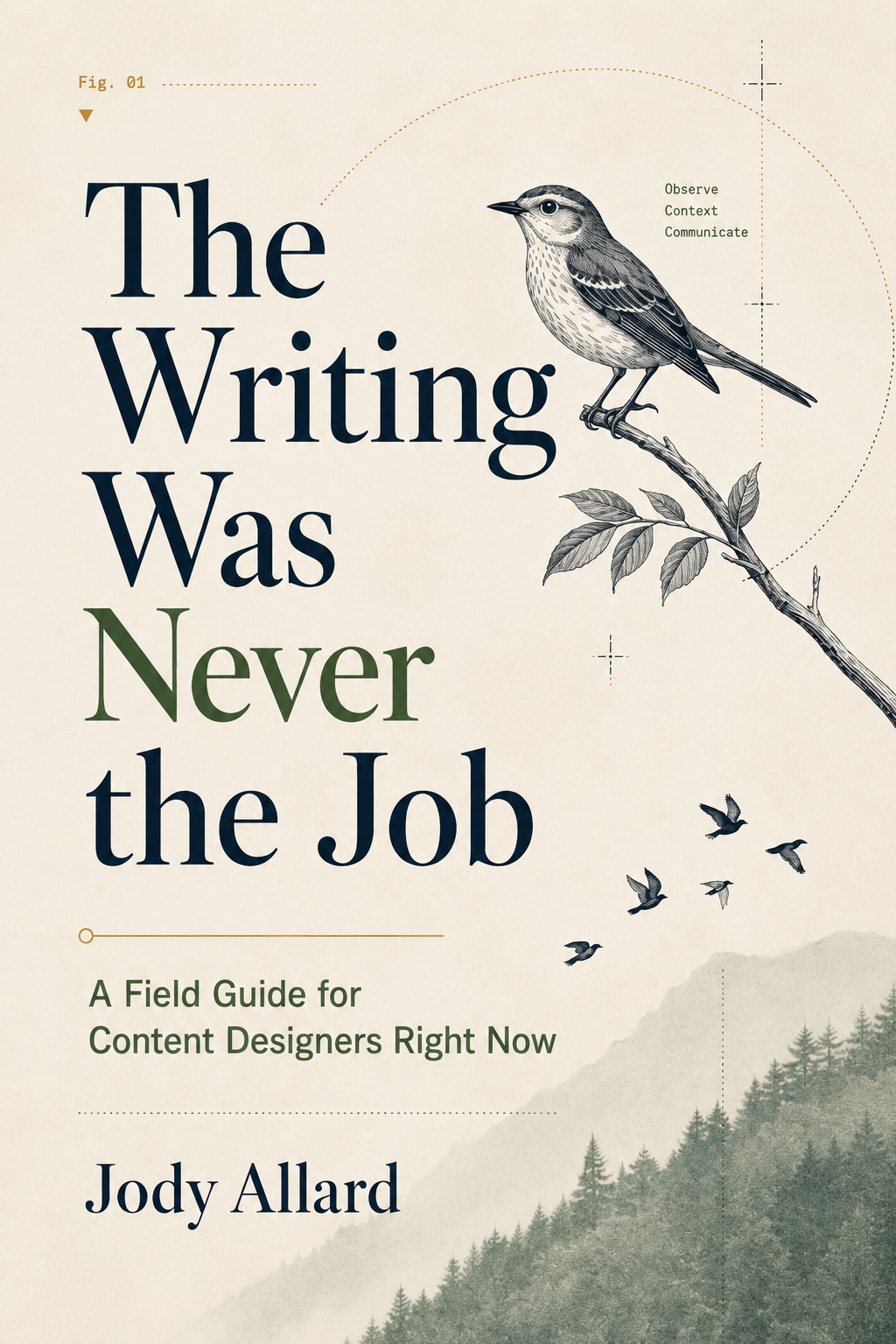
A Field Guide for Content Designers Right Now
Content design has changed. AI is reshaping the work, the job market has split, and the old career playbook no longer works. This is a candid field guide for content designers trying to understand what comes next.
Drawing on more than two decades in content strategy and leadership, I map the forces transforming the discipline and the two paths emerging from them: traditional content design evolving toward deeper strategic influence, and the growing world of content engineering and content model design.
For content designers at every stage — from people trying to break in to senior ICs and leaders navigating what comes next.
Get it on AmazonReach out via email or LinkedIn — I'd love to hear from you.